
Virtual Concerts and How Digital Performances Are Redefining Live Entertainment

Live music used to be a place you went. A room, a stage, a crowd, a single angle of reality. Now it is also a space you enter. A performance you inhabit. A show that can be filmed like cinema, rendered like VFX, and performed like theatre, without being trapped inside gravity, geography, or venue capacity. Virtual concerts are not replacing the real world gig. They are expanding what “live” can mean.
The shift is not only about headsets and platforms. It is about performance language. When an artist steps into a digital stage, choreography can be captured as motion data, the face can be animated down to micro expression, and the environment can respond to the music like a living instrument. Metaverse concerts sit at the intersection of performance capture, real time rendering, and audience presence, where the crowd is no longer just watching, but moving inside the narrative.
For artists, this is an evolution of identity as much as production. A digital double can carry the same emotional signature as the performer, while also unlocking impossible worlds, surreal scale, and new ways to direct attention. When done with craft, virtual performance stops feeling like a tech demo and starts feeling like music.
Table of Contents
What Virtual Concerts Actually Are Now
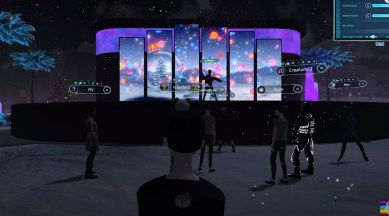
A virtual concert is not one format. It is a spectrum of performance experiences that borrow different amounts from film, games, theatre, and live broadcast. The common thread is presence: the feeling that the artist is performing with intention, and the audience is there with them, even if “there” is a rendered world.
Here are the most common modern forms:
Real time virtual stages where the performer is captured live and streamed into a digital environment
Pre built cinematic performances where motion capture and facial animation are crafted offline, then premiered as a live event
Hybrid shows that blend physical stages with AR overlays, volumetric inserts, or holographic style illusions
Social world performances where the crowd gathers as avatars, reacting, moving, and sharing space in a persistent digital venue
What makes metaverse concerts feel distinct is the audience layer. The crowd is not just a view count. It is a visible community inside the event: proximity, emotes, movement, and shared moments designed like a virtual set.
The Production Pipeline Behind Digital Performances

To make digital performance feel like performance, not animation, the pipeline has to respect the same truth a camera respects: the body tells the story. This is where craft matters. The most convincing virtual concerts are built on the same foundations as high end character VFX, just tuned for music timing, persona, and stage energy.
A typical pipeline looks like this:
Creative direction built around musical identity, not platform gimmicks
Performance capture of body movement to preserve rhythm, attitude, and intentionality
Facial capture or keyframed facial work focused on phrasing, breath, and emotion
Rigging that supports performance ranges, from subtle mouth shapes to aggressive stage motion
Look development for skin, hair, cloth, and stage lighting so the artist reads as present
Environment design that behaves like a music video world, not a static game map
Real time rendering for live broadcast style shows, or offline rendering for cinematic premieres
Final delivery through interactive worlds, VR experiences, streaming platforms, or hybrid stage systems
This is the point where “digital performer” becomes a performance ready virtual artist. Not a mascot. Not a filter. A believable presence built from movement, facial nuance, and lighting discipline.
Comparison Table
Approach | What the Audience Experiences | Core Tech and Craft | Best For | Tradeoffs |
Live captured virtual stage | A real time show inside a digital venue, with immediate energy | Motion capture, facial capture, real time engines, live lighting control | Album launches, global tour moments, interactive crowd presence | Requires robust live pipeline, less time for polish |
Cinematic virtual premiere | A “live” event that feels like a film, timed and authored | Performance capture, offline rendering, VFX compositing, cinematic lighting | Story driven releases, high concept visuals, repeatable screenings | Less improvisation, longer production lead time |
VR immersive concert | The audience feels inside the performance space | Spatial audio, VR staging, interactive camera presence, optimized assets | Deep fan experiences, premium ticketed access, limited runs | Hardware friction, comfort constraints, design complexity |
Metaverse social world concert | A shared event with crowd movement, social reactions, and scale | Networked world hosting, avatar systems, real time staging, event scripting | Community moments, brand safe worlds, repeat attendance | Visual fidelity varies by platform, crowd control challenges |
Hybrid physical plus digital overlays | A real venue augmented with digital spectacle | AR tracking, projection mapping, real time overlays, stage integration | Festivals, arenas, broadcast specials | Complex technical coordination, rehearsal heavy |
Applications Across Industries

The techniques behind virtual concerts travel well because they are fundamentally about believable digital presence, authored worlds, and real time audience connection.
Real world use cases include:
Music and touring: digital tour stops that extend a physical run into regions the tour cannot reach
Film and streaming: performance specials that blend concert language with cinematic narrative
Gaming and social platforms: event concerts that happen inside persistent online worlds
Fashion and culture: digital runway style performances driven by music and avatar presence
Education and creator economy: masterclasses and live performance breakdowns inside immersive spaces
If you want the wider landscape of this shift, the perspective in The future of the music industry fits naturally here as context for why performance is moving into digital ecosystems. Use it as an editorial reference point, not a slogan: The future of the music industry.
To understand adjacent formats that often overlap with metaverse concerts, Virtual reality music experiences helps map the difference between watching a performance and being placed inside it: Virtual reality music experiences.
For artists exploring stage illusion and mixed reality aesthetics, Holographic concerts sits close to the same conversation, especially in how audiences interpret “presence” when the performer is light, projection, or render: Holographic concerts.
And if you want a direct bridge between this topic and audience expectations, How virtual music performances are changing live entertainment is the cleanest internal connection point: How virtual music performances are changing live entertainment.
Benefits

Virtual concerts widen the stage without thinning the soul of the performance when they are built on real motion, real facial intention, and real lighting logic.
Key benefits include:
Global reach without tour logistics, visas, or venue availability
Creative control over camera, world, and timing, closer to music video language
Performances that can be interactive, replayable, and collectible without feeling “recorded”
Safer experimentation for new personas, alternate selves, and visual reinvention
Accessibility options like camera choice, subtitles, and spatial audio mixes
Audience presence that can be measured and designed, not guessed from the back row
When the pipeline is artist led, metaverse concerts become a new type of venue: one that can shape itself around the music.
Challenges
The hardest part is not building a digital stage. It is making the artist feel alive inside it.
Common challenges include:
Uncanny facial performance when capture, rigging, and lighting are not aligned
Latency and reliability in live systems, especially at large crowd scale
Visual consistency across devices, from phones to headsets to desktop GPUs
Audience behavior design, moderation, and keeping the show readable in social worlds
Creative dilution when platforms push templates instead of authored direction
Budget and schedule pressures, especially for high fidelity digital doubles
A virtual performer only works when the smallest details work: the weight shift before a chorus, the breath timing, the micro tension around the eyes.
Future Outlook

The next era of virtual concerts will not be defined by one platform. It will be defined by pipelines getting tighter and more expressive.
Expect these shifts to accelerate:
Better performance capture that prioritizes facial nuance and live musical timing
Real time rendering that approaches cinematic lighting, especially with improved character shading
More hybrid shows where physical venues and digital stages share a single visual language
Digital music avatars that evolve across eras, carrying a performer’s identity through different visual worlds
Audience agency that is directed like choreography, not left to chaos
Volumetric and multi camera capture feeding interactive playback, so “live” can be revisited from new angles
The most interesting future is not just “more immersive.” It is more authored. A metaverse concert that feels directed, paced, and emotionally intentional, while still holding the electricity of liveness.
If you want a wider view of how AI and craft are starting to meet in this space, AI in music video is a useful companion piece, especially in how automation can support, not replace, authorship: AI in music video.
FAQs
What is the difference between virtual concerts and metaverse concerts?
Virtual concerts describe any digital performance experience, from streamed CGI stages to VR events. Metaverse concerts usually imply a shared social world where audiences attend as avatars and interact inside the venue.
Are virtual concerts actually live?
They can be. Some are performed in real time with live motion capture and broadcast. Others are pre produced performances premiered at a specific time to simulate a shared live moment.
Do artists need a digital avatar for a metaverse concert?
Not always. Some shows use stylized avatars or platform native characters. High fidelity digital doubles become important when the goal is realism, emotional closeness, and recognizable identity.
What makes a digital performance feel emotionally real?
Performance capture quality, facial animation, believable lighting, and timing. The audience forgives spectacle mistakes faster than they forgive a face that does not carry intention.
Is VR required for immersive concerts?
No. Many immersive experiences run on desktop and mobile with interactive camera systems. VR increases presence, but it also increases friction, so the best strategy depends on audience behavior.
How do creators handle crowd interaction in metaverse concerts?
Through event scripting, moderated social tools, and designed interaction moments. The most successful shows treat the crowd like part of the staging, not a random variable.
Are virtual concerts replacing touring?
They are more like an extension of touring. Digital shows can reach regions a tour cannot, support album releases, and create one off spectacles that would be impossible in a physical venue.
What does production typically involve?
Creative direction, performance capture, rigging, facial work, environment design, lighting, rendering, and platform delivery. Whether it is real time or offline changes the balance of speed versus polish.
Conclusion
Virtual concerts are not a detour from live music. They are a new class of venue built from performance capture, cinematic lighting, and world design that listens to the song. Metaverse concerts take it further by turning the audience into visible presence, not passive viewership, and by letting the stage behave like a living environment instead of a fixed room.
The artists who will define this era are the ones who treat digital performance like performance: body first, face truthful, lighting intentional, and worlds designed to amplify the music rather than distract from it. When that craft is respected, the result is not “virtual.” It is a different kind of real, a live moment authored with the tools of VFX, animation, and music video direction, but still driven by the same heartbeat that fills a room when the chorus hits.

Comments