
Virtual Production for Music Videos: CGI Sets Without Reshoots

Virtual production for music videos gives artists a way to design impossible stages before the camera rolls. Instead of waiting until post-production to discover whether a CGI world, avatar performance, or LED backdrop feels right, the creative team can test the scene in real time, adjust the camera language, and protect the song's visual identity earlier.
For artist teams, labels, directors, and producers, the promise is not only spectacle. It is fewer unclear approvals, better reuse of digital assets, stronger social cutdowns, and less pressure to fix every ambitious idea after production. At Mimic Music Videos, virtual production connects 3D animation, motion capture, AI-assisted concepting, digital avatars, real-time environments, and immersive performance into one practical music-video workflow.
This guide explains how virtual production works for music videos, where it fits beside previsualization and traditional shoots, what artists should prepare, which mistakes to avoid, and how to measure whether the process actually improves a release campaign.
Table of Contents
What Virtual Production Means for Music Videos
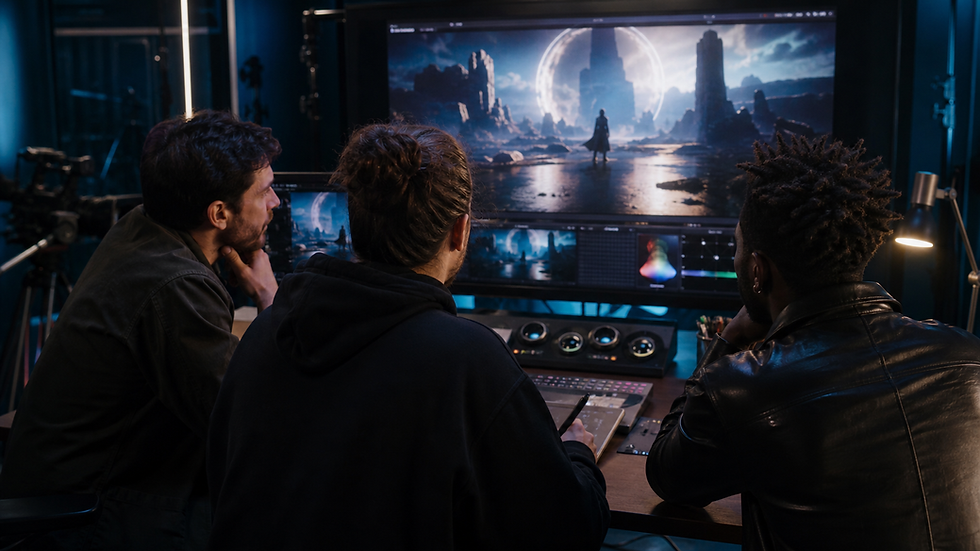
Virtual production is a production method that lets music-video teams combine physical performance with real-time digital environments. It can involve LED stages, game-engine scenes, virtual cameras, motion capture, digital doubles, AI-assisted references, and live compositing. The useful shift is that artists can see more of the final world while decisions are still flexible.
In a CGI-heavy video, that matters. A director can test a camera move against a 3D set. A label can review whether the chorus reveal feels premium. An artist can judge whether the virtual lighting supports their performance. A VFX supervisor can flag what should be captured in camera and what should stay in post.
Virtual production does not replace music video previsualization. It extends it. Previs plans the idea; virtual production lets the team perform inside a more believable version of that idea before final rendering and post-production lock the campaign into place.
Virtual Production vs Traditional Music Video Production
Traditional music video production still works beautifully for documentary intimacy, practical sets, live performance, and location-driven storytelling. Virtual production is best when the video needs impossible worlds, repeatable digital assets, fast visual iteration, or campaign extensions beyond one final edit.
Traditional shoot: best for real locations, physical chemistry, natural texture, and fast emotional realism.
Hybrid shoot: best when the artist performs physically while CGI expands the set, lighting, or background world.
LED or real-time stage: best for reflective surfaces, performance feedback, fast art-direction changes, and camera-ready environments.
Full CGI pipeline: best for digital avatars, surreal worlds, impossible camera moves, and reusable campaign assets.

Benefits for Artists, Labels, and Directors
The main benefit is creative confidence. Artists can judge scale, movement, and mood while the production plan is still alive. Labels can approve the world before the budget moves into final assets. Directors can make bolder choices because they are not describing a future frame from memory alone.
Creative clarity: real-time review reduces vague notes like make it more cinematic or more futuristic.
Budget control: teams can prioritize hero shots and stop building scenes that do not support the song.
Performance feedback: artists can respond to the world, not a blank studio with abstract promises.
Campaign reuse: approved environments can support teasers, vertical edits, tour screens, album visuals, and immersive fan moments.
This is especially useful when a campaign also includes digital avatars for music videos, facial animation, choreography capture, or virtual performance. The better the production system, the easier it is to keep the artist's identity consistent across formats.
How the Virtual Production Workflow Works
The workflow starts with the song, not the technology. Tempo, lyrics, audience, release platform, artist persona, and campaign goals decide what the virtual world should do. A dark cinematic single may need controlled camera moves and emotional closeups. A dance track may need loopable choreography, kinetic lighting, and vertical-friendly blocking.
Brief: define the song mood, key audience, visual references, deliverables, and approval owners.
Look development: test environments, lighting, wardrobe, color, camera grammar, and AI-assisted concept references.
Real-time build: prepare a usable stage world, virtual camera setup, mocap plan, and rough edit timing.
Production: capture the artist with LED, tracked camera, mocap, practical lighting, or hybrid compositing as needed.
Finish and adapt: refine the hero video, then export supporting social, stage, VR, and campaign assets from the same world.

Use Cases Across a Music Release Campaign
A strong virtual production plan should not stop at the hero video. Music campaigns now need many connected assets: horizontal videos, vertical clips, visualizers, stage loops, album art, fan teasers, behind-the-scenes content, and immersive extensions. When the same world is planned early, each asset feels connected instead of improvised.
Discovery: use the virtual world for teaser shots, silhouette reveals, short loops, and pre-release visual hooks.
Release week: deliver the main music video plus vertical edits, lyric moments, and paid social variants.
Live performance: adapt the environment for screens, virtual stages, hybrid concerts, and holographic moments.
Fan experiences: extend the visual world into VR music videos, interactive rooms, remix visuals, or campaign unlocks.
This is where virtual production connects naturally to VR music videos, holographic concerts, and artist-led campaign worlds. The same creative architecture can travel across the audience journey.
Data, Assets, and Approvals to Prepare
Virtual production moves faster when the inputs are clear. The team does not need every final asset at the start, but it does need enough detail to avoid guessing about the artist's identity, release needs, or technical constraints.
Song inputs: final or near-final audio, lyrics, BPM, section markers, emotional arc, and key moments.
Artist inputs: wardrobe, movement references, persona notes, previous visuals, scan needs, and brand boundaries.
Technical inputs: aspect ratios, render style, LED requirements, tracking needs, mocap plan, and delivery specs.
Campaign inputs: teaser calendar, social formats, stage needs, album art needs, and approval timeline.
Rights inputs: likeness permissions, AI-use boundaries, scan ownership, voice limits, and future reuse rules.
Mistakes to Avoid
The biggest mistake is treating virtual production as a visual trick instead of a production system. A beautiful LED wall or real-time environment can still fail if the song, performance, camera rhythm, and release strategy are weak.
Starting with technology instead of the song: the world should serve the track, not announce the pipeline.
Forgetting vertical formats: a wide cinematic frame may need different blocking for short social edits.
Approving stills but not timing: a still may look strong while the edit feels slow or disconnected from the chorus.
Skipping reuse planning: if scenes only work once, the campaign loses value after the main video launches.
Leaving rights until later: likeness, scan, voice, and AI permissions should be discussed before production expands.
KPIs for Measuring Virtual Production Success
Virtual production is creative, but it can still be measured. The right KPIs show whether the workflow improved decision speed, campaign reuse, audience response, and production efficiency.
Creative approval speed: fewer unclear notes, faster sign-off, and fewer late concept resets.
Production efficiency: fewer wasted builds, fewer reshoots, and clearer asset priorities.
Campaign output: number of teasers, loops, vertical edits, stage visuals, and immersive assets created from one world.
Audience response: completion rate, rewatches, shares, saves, comments, and recognition of the artist's visual world.
Long-term reuse: whether assets support future videos, virtual concerts, album art, and fan experiences.
For artist teams building a broader visual identity, these KPIs should sit beside standard video metrics. Views matter, but so does whether the release world becomes easier for fans to remember and revisit.

Responsible AI, Likeness, and Rights Planning
Virtual production can involve sensitive identity materials: face scans, body motion, wardrobe, unreleased music, AI-generated references, and synthetic performance tests. These materials should be governed before they become reusable campaign assets.
A responsible plan defines what AI can support, who approves likeness-based outputs, whether voice synthesis is excluded, how scan files are stored, and where the virtual version of the artist can appear after the main video. That becomes even more important when the work connects to artist avatar strategy or interactive fan experiences.
Consent: confirm approved uses for face, body, voice references, motion data, and AI-assisted tests.
Storage: decide who can access scans, rigs, mocap files, references, and unreleased creative materials.
Approval: require review for campaign reuse, brand partnerships, interactive formats, and future visual worlds.
Boundaries: keep the artist's authorship clear when generated references influence the final style.

Future Trends in Virtual Production for Music Videos
Virtual production is moving closer to real-time creative direction. Artists will be able to rehearse inside digital worlds earlier, directors will test camera moves faster, and labels will understand campaign extensions before final rendering begins.
Real-time stages will make lighting, camera, and environment decisions more visible during production.
Avatar-led workflows will support consistent identity across music videos, live screens, social edits, and fan spaces.
AI-assisted concepting will speed up exploration, but stronger approval rules will matter more, not less.
Immersive music worlds will blur the line between the main video, tour visuals, VR rooms, and interactive release content.
For teams exploring AI music video production and 3D music video production, the best future-proof decision is to treat the visual world as an asset system from the beginning.
FAQ
What is virtual production for music videos?
It is a production workflow that combines artist performance with real-time digital environments, LED stages, virtual cameras, motion capture, CGI assets, and live creative review.
How is virtual production different from previsualization?
Previsualization plans the video before production. Virtual production lets the team perform, shoot, and review inside a more developed version of the digital world.
Do artists need an LED stage for virtual production?
Not always. Some projects use LED volumes, while others use tracked cameras, green screen, motion capture, real-time previews, or hybrid CGI workflows.
Can virtual production reduce music video reshoots?
It can reduce avoidable reshoots by making camera angles, lighting, scale, scene logic, and campaign format needs clearer before final production is locked.
How does motion capture fit into virtual production?
Motion capture helps translate dance, gesture, body language, and performance timing into digital avatars or CGI characters that can be reviewed in the virtual scene.
Is virtual production only for major-label videos?
No. Smaller projects can use virtual production principles through targeted previs, real-time environment tests, controlled CGI shots, and efficient social-first asset planning.
What should an artist prepare before a virtual production shoot?
Prepare the track, lyrics, section markers, references, wardrobe direction, movement needs, campaign deliverables, approval owners, and any likeness or AI boundaries.
Can virtual production support VR music videos and concerts?
Yes. A well-planned virtual world can become the basis for VR scenes, concert screens, holographic moments, fan rooms, and immersive campaign extensions.
Conclusion
Virtual production for music videos gives ambitious ideas a clearer path from song to screen. It helps teams test CGI worlds, virtual cameras, motion capture, AI references, artist avatars, and campaign assets before the most expensive decisions are locked.
The strongest workflows keep the artist at the center. Technology should make the performance more expressive, the campaign more coherent, and the final video easier for fans to recognize across every format.
For virtual production, CGI music-video direction, motion capture, AI-enhanced creative planning, and immersive release-world design, explore Mimic Music Videos before your next campaign moves from concept to camera.


Amazing write-up! It’s always exciting to witness the changes brought about by technological innovations in the entertainment industry. Innovation requires creativity in implementation, just like Canada enamel pins that turn creativity into something unique for the benefit of all brands.